
Technical Services logo with red banner and blue swoosh accents
249 VAN Launch Kit 249 VAN Consumer Brochure Smart Thermostat Sell Sheet 249 VAN Launch Kit

Unlock the Full Potential

View Quick Start Guide

This installation was on a 4-story home, and the tech had not yet gone to the basement to troubleshoot the “infinity” water source heat pump, as he was told he by the homeowner. He was in the attic at the infinity furnace above the 4th floor. He was getting his dcv in the proper range on his A and B green plug on the air handler, 3 to 4 vdc. His indoor board ohm reading was in range, 28k to 32 k. The tech ohmed out the A and B thermostat wires on the water source heat pump from the upstairs. His ohm reading was not in range of a normal infinity board. His reading was around 64.4k. The tech then made the long walk to the basement where the “geothermal heat pump” was located. Bingo. 

Now get out there and organize some zone wiring!

Zone equipment would be identified as indoor unit- blue black/ outdoor unit-blue green:
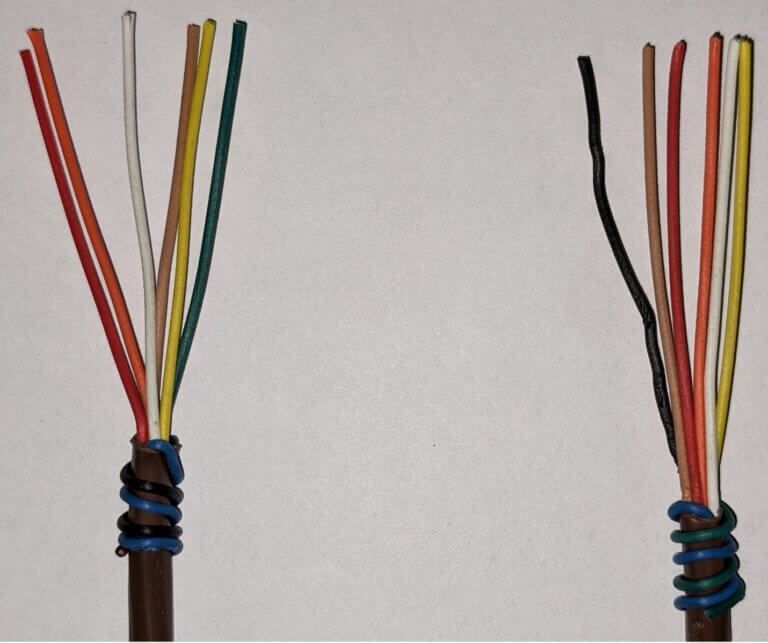
Close-up of two stripped electrical wires, one with multicolored strands and one with black, red, white, and yellow wires.
Picture of Anthony Coker

Anthony Coker

Technical Services Manager North Georgia District

September 8, 2022

Testing Capacitors

First, let us start by saying there are a variety of capacitors in various shapes, sizes and colors. For the purpose of this article, we will just be talking about run capacitors, dual capacitors and I’ll offer a brief explanation of start capacitors. We will not go into how capacitors work because this is strictly for testing purposes only when you are out in the field.


Please, before ever attempting to do these procedures, be safety conscious about what you are doing. Always discharge the capacitors with a discharging tool, which can be found online. Never touch a capacitor until you have done so.

Capacitors

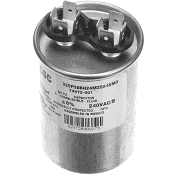
Silver metal capacitor with two terminals on top and a printed label

Round 2 terminal capacitor

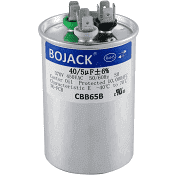
Silver BOJACK cylindrical capacitor with blue label and black terminals on top.

Round 3 Terminal Dual Capacitor

Silver Titan Pro dual-run capacitor with two terminals on top

Oval Capacitor

Silver metal capacitor with three black terminals on top

Oval Dual Capacitor

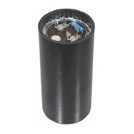
Black cylindrical container with a top view of assorted small objects inside

Start Capacitor - Black

Brown cylindrical paper tube with a broken top and crumpled white paper inside

Start Capacitor - Brown

You might say: the system is running, so the capacitor must be good! That is not 100% true. Now let’s see why.

A capacitor has a voltage rating on it such as 370 vac or 440 vac. So, anytime you exchange it with a new one, make sure you get the voltage that matches or is greater than the one you are replacing. Also, remember to get the manufacturer rated capacitor for the motor. Do not replace with a different size microfarad.


Capacitors are used on motors to make them more efficient by increasing the RMS (Root Means Square) of the sine wave. Capacitors increase efficiency by taking the load off the windings and they have a range for tolerance. For example, a 5 microfarad capacitor with a +/- 5% tolerance means that 5-microfarad x .05 (which is 5%) = .25 tolerance. You can add 5 or subtract 5 and that will be your range. In this example, it would be a range of 4.75 to 5.25 microfarads. If you put your meter on microfarads and measure the capacitor from one side to the other and it reads 4.25 or 5.75, it will be out of range. This makes the motor less efficient and should be replaced. You should also check the new one as well because you can get one out of tolerance right out of the box.

Start capacitors are usually made of a composite material. They are usually black or brown but they can be other colors as well. They are rated in ranges such as 150 to 275 microfarads. That is how you can tell that they are start capacitors because they are only used for a moment to boost the starting of the compressor.

A run capacitor is in the circuit the entire time the motor is running. Typically, they are in a metallic shell and they come in various shapes. For example, it can be a round canister looking object or it can be oval looking cannister. Run capacitors can have either two or three terminals to put wires. Each terminal can take 1-4 wires. The capacitors with just two terminals are called run capacitors and the ones with 3 terminals are called dual capacitors. The only difference between single vs dual capacitors is that dual capacitors internally share one point – which they call “common”. The other two terminals are called herm and fan. Herm for the compressor and fan is for the fan.


Testing Without Power


As a reminder, you have to read the tolerances of the capacitors each time you use one and remember that some manufacturers make the plus and minus tolerances different. For example, some might have a tolerance of +10%/-5%.

When you test a dual capacitor, always remember to discharge it before continuing. You have to measure from the common to herm and the common to fan and determine the tolerance for both. This would be like testing two single capacitors but this one shares one terminal – the COMMON!

You may see μF on your meter or MFD. They both stand for “microfarad”. Learn your meter with no power before you learn with power. Again, safety first!


Testing With Power

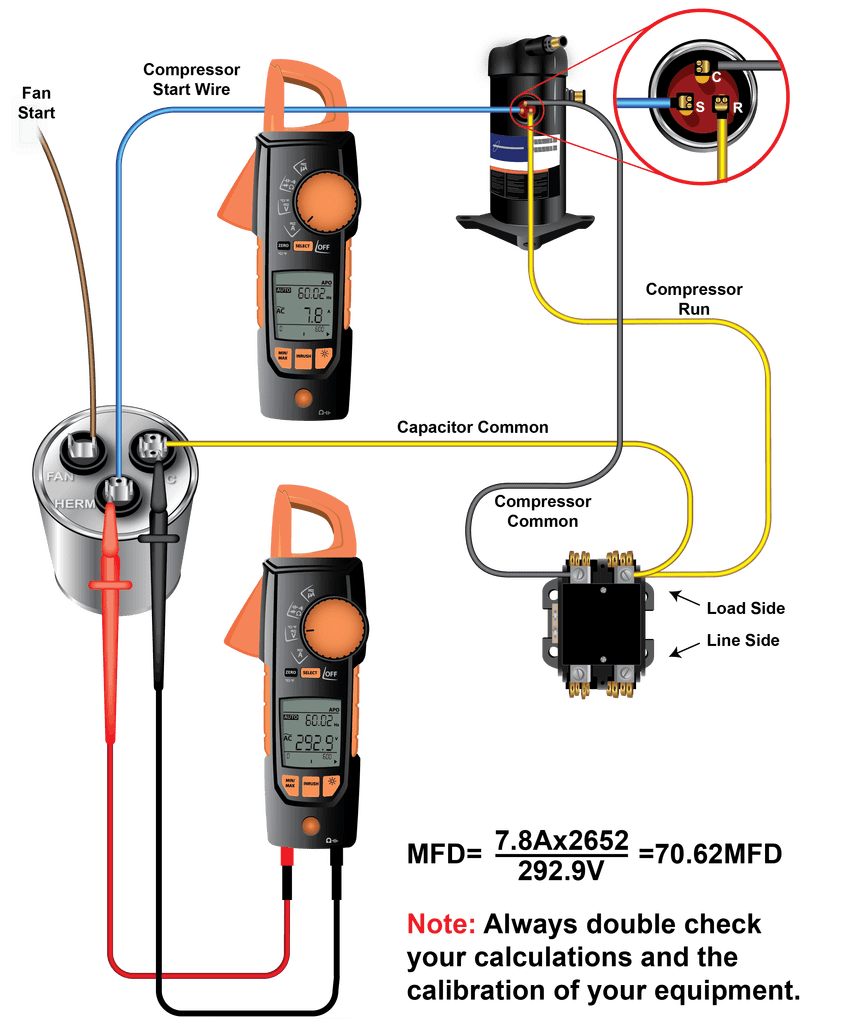
Wiring diagram for a compressor circuit with clamp meters, fan, and labeled power connections.

Remember this is live and to use extreme caution during this process!
NIn the picture, the top meter is measuring the amperage or amps of the herm wire which is the compressor side of the capacitor. The bottom multimeter is reading the voltage from the herm wire to the common. The formula to calculate microfarads is shown with values from the example


MFD = (Amperage x 2652) / voltage


Simply measure the voltage from the herm to the common on the capacitor and write it down. Then measure the amperage of the herm wire coming from the capacitor to the compressor and write it down. Plug the numbers from your readings into the formula to find the microfarad reading

249 VAN Launch Kit 249 VAN Consumer Brochure Smart Thermostat Sell Sheet 249 VAN Launch Kit

Unlock the Full Potential

View Quick Start Guide

This installation was on a 4-story home, and the tech had not yet gone to the basement to troubleshoot the “infinity” water source heat pump, as he was told he by the homeowner. He was in the attic at the infinity furnace above the 4th floor. He was getting his dcv in the proper range on his A and B green plug on the air handler, 3 to 4 vdc. His indoor board ohm reading was in range, 28k to 32 k. The tech ohmed out the A and B thermostat wires on the water source heat pump from the upstairs. His ohm reading was not in range of a normal infinity board. His reading was around 64.4k. The tech then made the long walk to the basement where the “geothermal heat pump” was located. Bingo. 


More to Explore

Family relaxing in a bright living room, parents on a gray couch with laptops while children play nearby
By Austin Sims August 4, 2026
At Mingledorff's we understand your business. We are your #1 HVAC and plumbing distributor choice. Trust our experience. Contact us today!
Mingledorffs
By Jenny Reed August 4, 2026
At Mingledorff's we understand your business. We are your #1 HVAC and plumbing distributor. Trust our experience. Contact us today!
Bright hobby shop with display cases, counter, and model kits; a few people stand near the back.
By Jenny Reed August 3, 2026
At Mingledorff's we understand your business. We are your #1 HVAC and plumbing distributor. Trust our experience. Contact us today!
Bright hobby shop interior with display cases, model kits, and a counter with two people inside.
By Jenny Reed August 3, 2026
At Mingledorff's we understand your business. We are your #1 HVAC and plumbing distributor. Trust our experience. Contact us today!

Heat Pump

Keep up with the latest HVAC news from Mingledorff’s Inc.