
Unlock the Full Potential
This installation was on a 4-story home, and the tech had not yet gone to the basement to troubleshoot the “infinity” water source heat pump, as he was told he by the homeowner. He was in the attic at the infinity furnace above the 4th floor. He was getting his dcv in the proper range on his A and B green plug on the air handler, 3 to 4 vdc. His indoor board ohm reading was in range, 28k to 32 k. The tech ohmed out the A and B thermostat wires on the water source heat pump from the upstairs. His ohm reading was not in range of a normal infinity board. His reading was around 64.4k. The tech then made the long walk to the basement where the “geothermal heat pump” was located. Bingo.
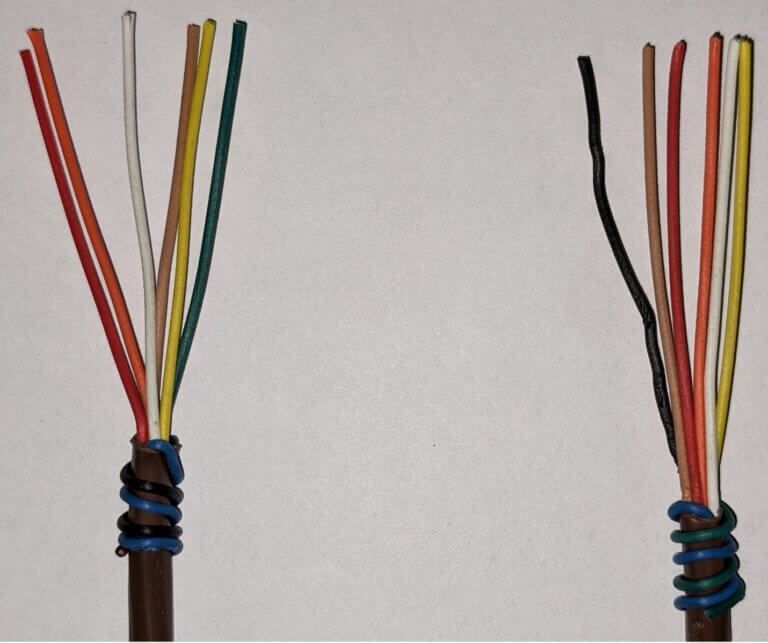
Now get out there and organize some zone wiring!
Zone equipment would be identified as indoor unit- blue black/ outdoor unit-blue green:
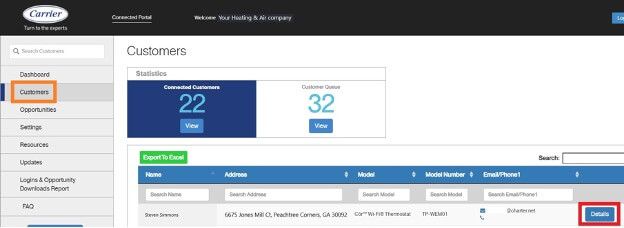
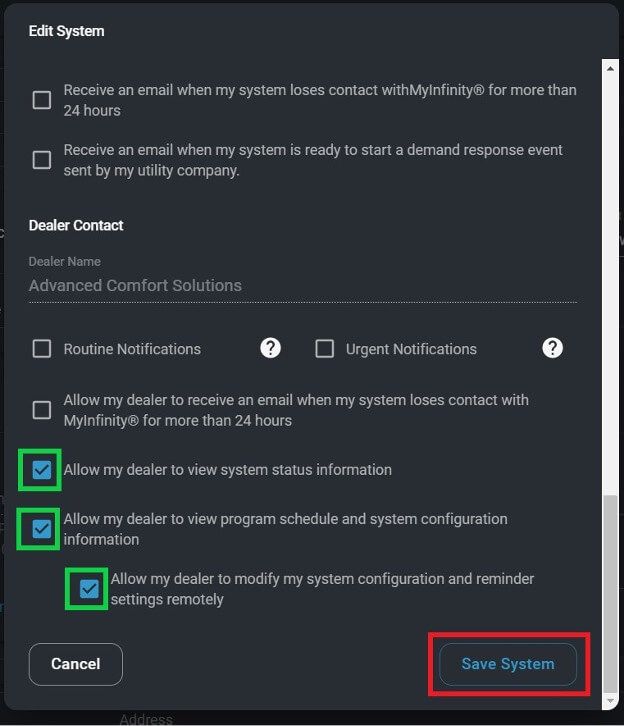
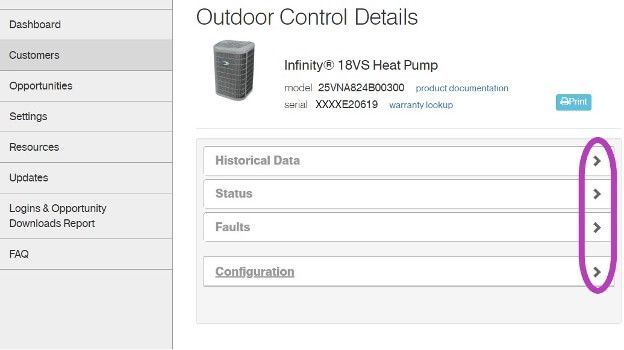
I have cropped some screens, and modified the serial numbers to keep certain dealer and customer’s information private. Setting the customers up on the portal is an easy process and could reap many benefits. Carrier and Bryant are going to begin utilizing this portal more with new upcoming equipment.
Get out there and get connected to the portal!
*Wiring diagrams highlighted with colors chosen for high contrast- not for wire color designation*
Low voltage starts in the red box at the transformer, 24vac goes to the Indoor Fan Board (IFB), through a fuse and on to the thermostat. Depending on what the thermostat calls for, 24vac will be sent down a different wire(s) to turn on/off the multiple devices in the system. The other low voltage wire (C) has an unbroken path to EVERY component in the unit. I have highlighted the pathway in blue and circled each component in purple. This wire/path is something each device has in “common”—it is the common wire. In layman’s terms, the common wire is the return pathway for voltage to come back to the transformer since it left out on the 24vac side.
The Common wire/terminal is always the one thing that is relatable or in common with the surrounding wires/terminals. Relays, motors, control boards, and even transformers all have some type of common wire/terminal. Common for a relay isn’t the same as common on a motor, but within each given device they carry the same meaning. Now go back and reread the second paragraph above—it will have a deeper meaning now.
Challenge: Check out the high voltage side of the Transformer. It has a COM terminal…. it’s not low voltage common. What is it?
That’s all.

July 6, 2022
What’s Your Resistance?
When assisting with field calls, I ask this question in reference to electrical devices several times a day. The answers that I receive back ranges from: 75, none, a lot, nothing, 237K, and many more. I would like to help you better understand what you are checking and how to “read” it.
Electricity wants to flow! This is a fact. What keeps electricity from flowing? Resistance. Resistance is a force that opposes the flow of electricity and is measured in Ohms. The symbol for Ohms looks like an upside down “U”. When checking resistance there are no negative numbers. It starts at Zero and goes up from there and goes into the millions.
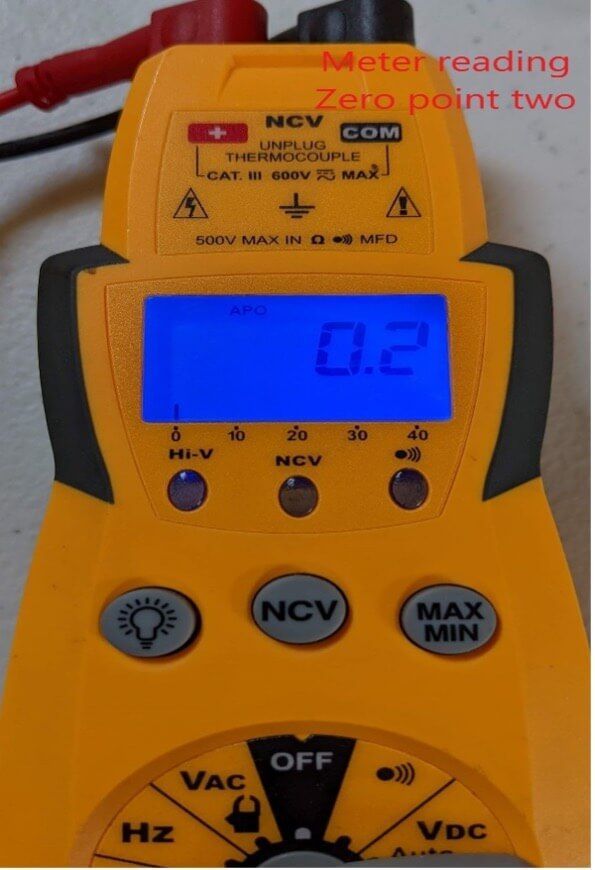
Whatever you are checking, whether it’s compressor windings, relay contacts, reversing valve coil, etc. if the meter reads 0.0 then this means electricity can flow with absolutely no trouble where as OL means the opposite that electricity will not flow at all. I recommend checking your meter for integrity periodically. This can be done by putting your leads together. This test should result in 0.0. Anything above 0.0 should be added to your reading when testing something. If the meter is reflecting anything higher than one or two ohms then the test leads and/or battery should be replaced. This ensures your readings are accurate.
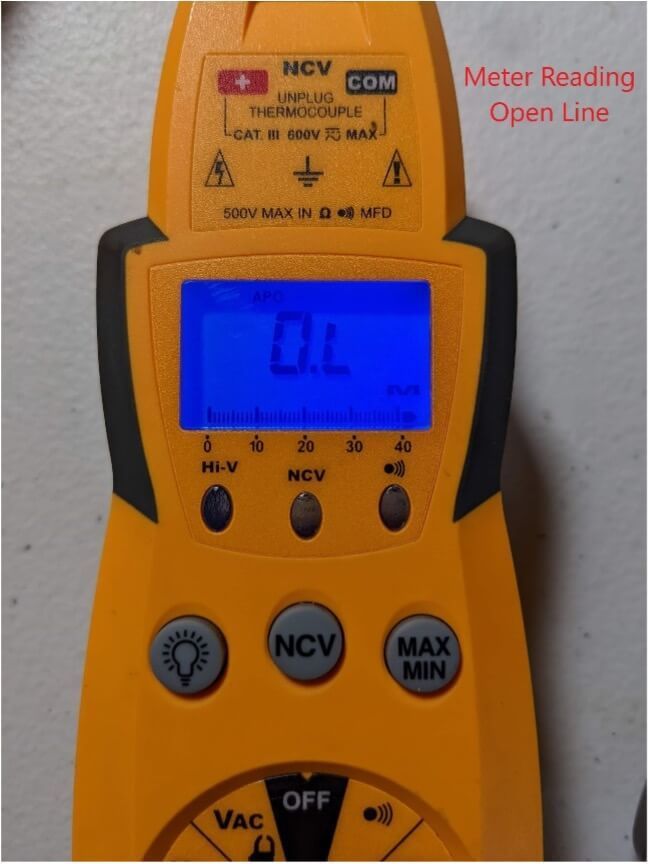
Sometimes the meter will not show a number but instead “OL”; this represents Open Line which more or less mean infinite ohms. OL can be tricky, though, because the meter being used will show “OL” when the resistance being checked is higher than the meter can check. For example, if a meter that is rated for 100 ohms is used to check something that is 120 ohms this meter will show OL.


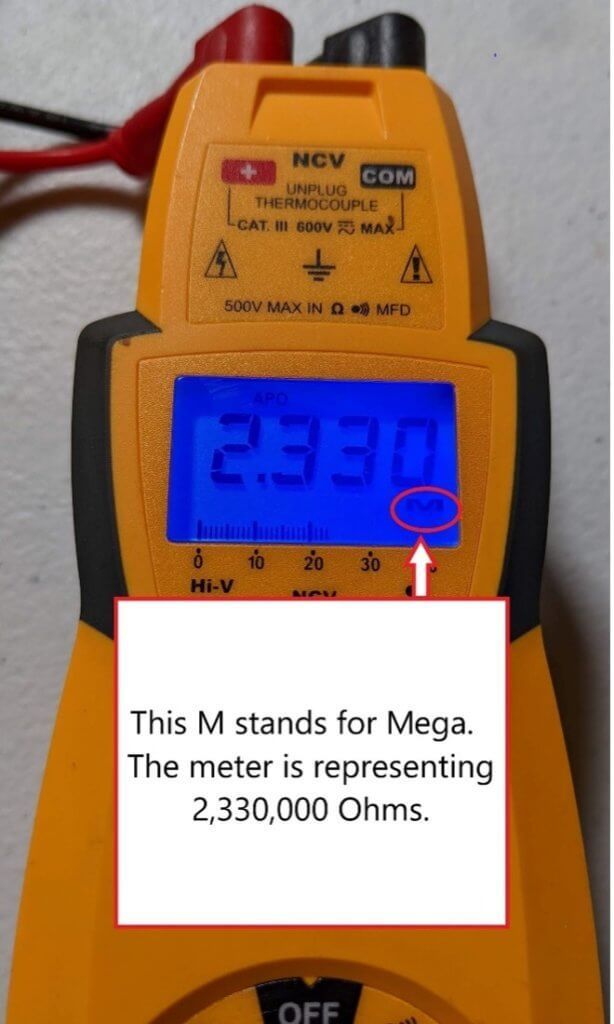
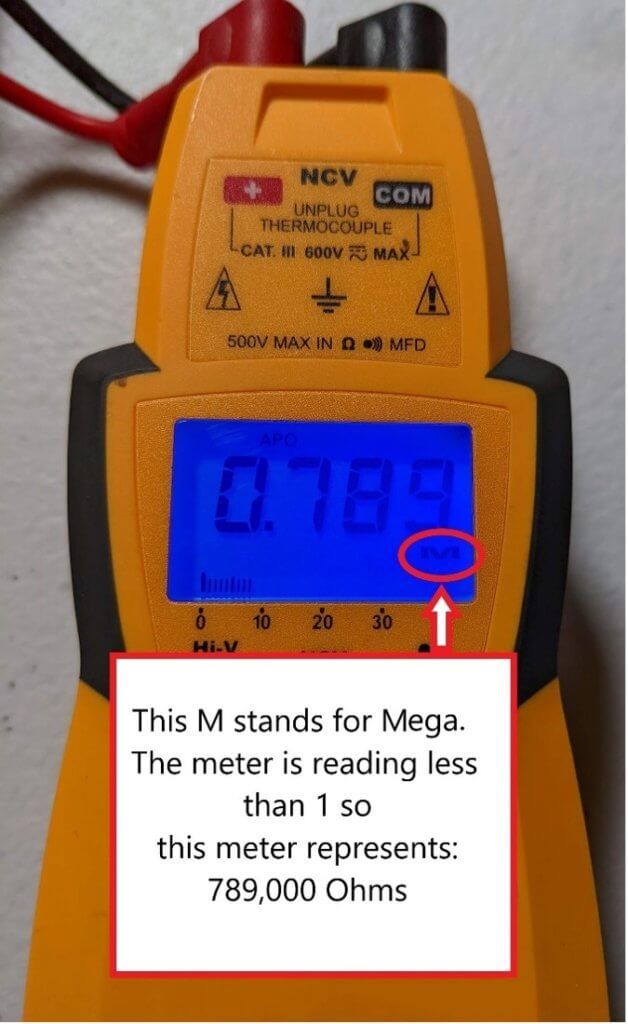
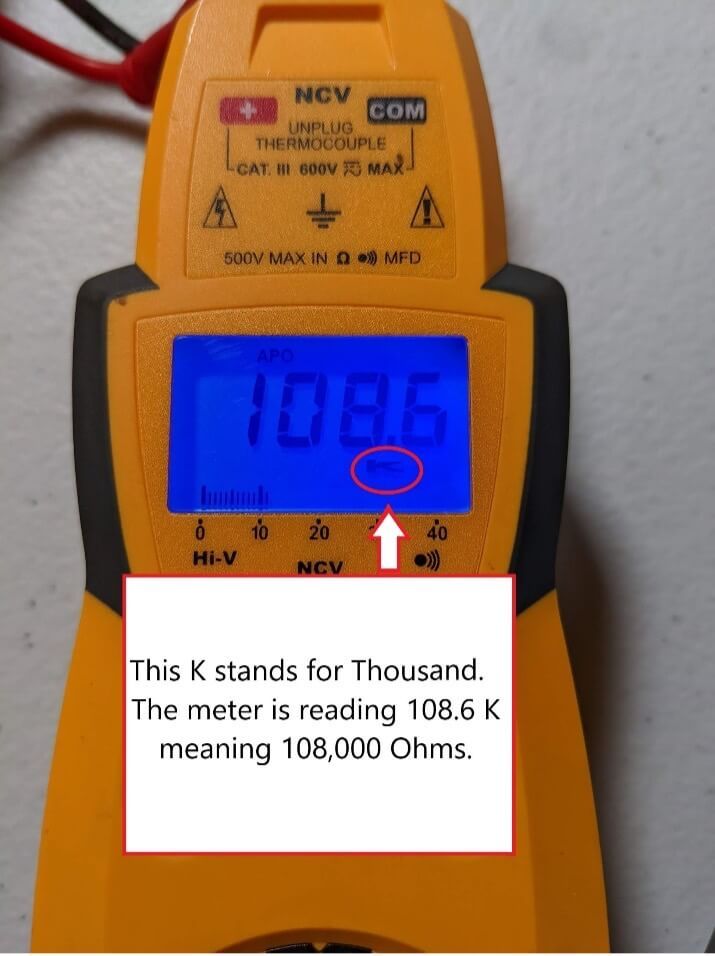
With all these possible large numbers it is impossible to put them on a meter’s tiny screen. To make the numbers fit, abbreviations have been made. K for Thousands and M for Mega. Mega means million. Things get misdiagnosed due to the two mentioned letters being overlooked. If a meter reads 1.1, 1.1 K, or 1.1 M these are not the same thing. The first is literally 1.1 and the second is 1,100 and the last being 1,100,000. For example, let’s say you’re reading a compressor’s resistance to ground and you are looking for it to be greater than 2 million. If you misread 2.1M for simply 2.1, then you have misdiagnosed the compressor as being grounded.


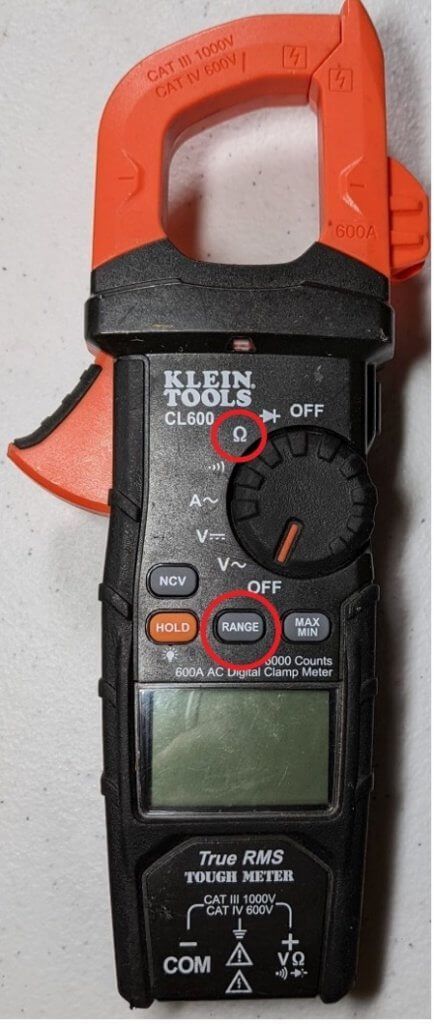
Some meters are auto ranging, meaning you simply put it on resistance and take your reading. If the meter is equipped with a “Range” button then you likely have to select which range you want to check. As you push the range button it will move the decimal which allows for different number arrangements. Each meter should be looked at individually for the exact specs but as an example the meter may start with 60 ohms range so anything over 60 would show OL. Pressing the range button one time changes it to 6,000. Here is an example from fluke
Range values
600.0 Ω
6.000 kΩ
60.00 kΩ
600.0 kΩ
6.000 MΩ
60.00 MΩ

If there’s resistances there’s an ohm value. Get out there and ohm something out!
Unlock the Full Potential
This installation was on a 4-story home, and the tech had not yet gone to the basement to troubleshoot the “infinity” water source heat pump, as he was told he by the homeowner. He was in the attic at the infinity furnace above the 4th floor. He was getting his dcv in the proper range on his A and B green plug on the air handler, 3 to 4 vdc. His indoor board ohm reading was in range, 28k to 32 k. The tech ohmed out the A and B thermostat wires on the water source heat pump from the upstairs. His ohm reading was not in range of a normal infinity board. His reading was around 64.4k. The tech then made the long walk to the basement where the “geothermal heat pump” was located. Bingo.
More to Explore
Heat Pump
Keep up with the latest HVAC news from Mingledorff’s Inc.