
Unlock the Full Potential
This installation was on a 4-story home, and the tech had not yet gone to the basement to troubleshoot the “infinity” water source heat pump, as he was told he by the homeowner. He was in the attic at the infinity furnace above the 4th floor. He was getting his dcv in the proper range on his A and B green plug on the air handler, 3 to 4 vdc. His indoor board ohm reading was in range, 28k to 32 k. The tech ohmed out the A and B thermostat wires on the water source heat pump from the upstairs. His ohm reading was not in range of a normal infinity board. His reading was around 64.4k. The tech then made the long walk to the basement where the “geothermal heat pump” was located. Bingo.
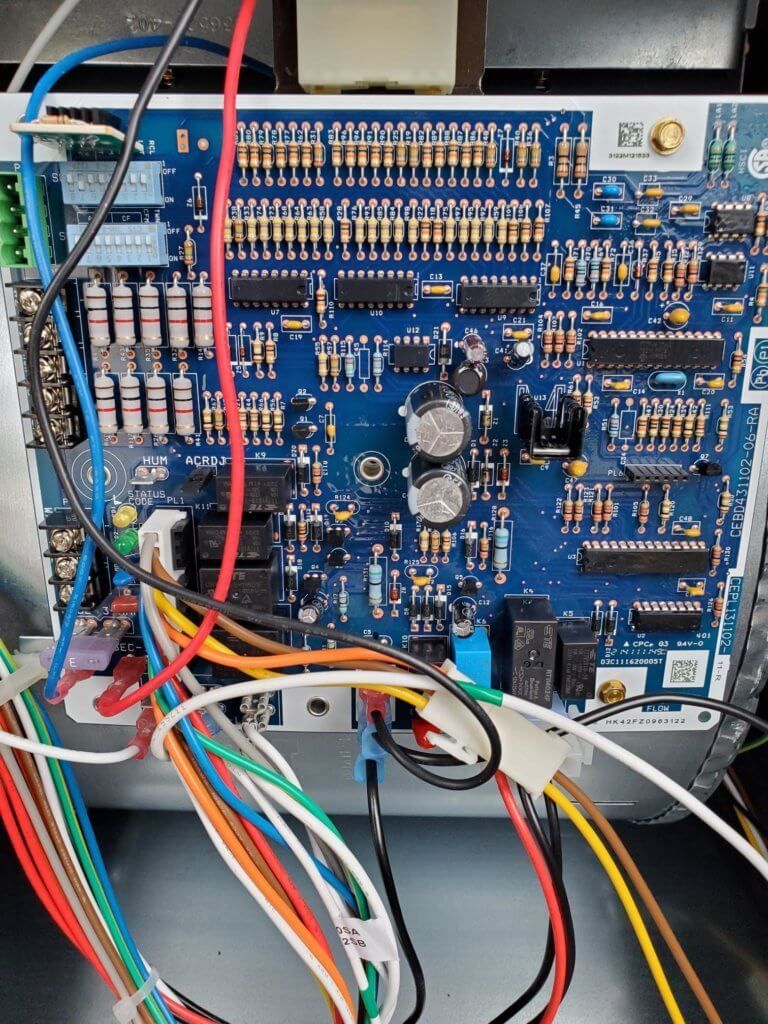
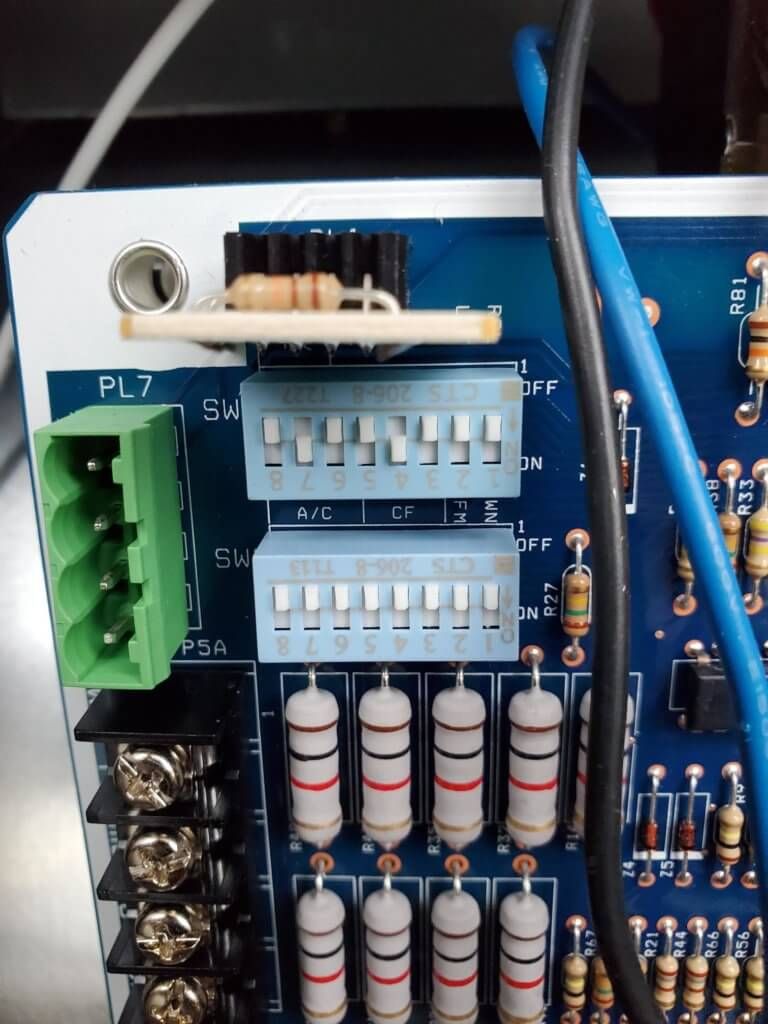
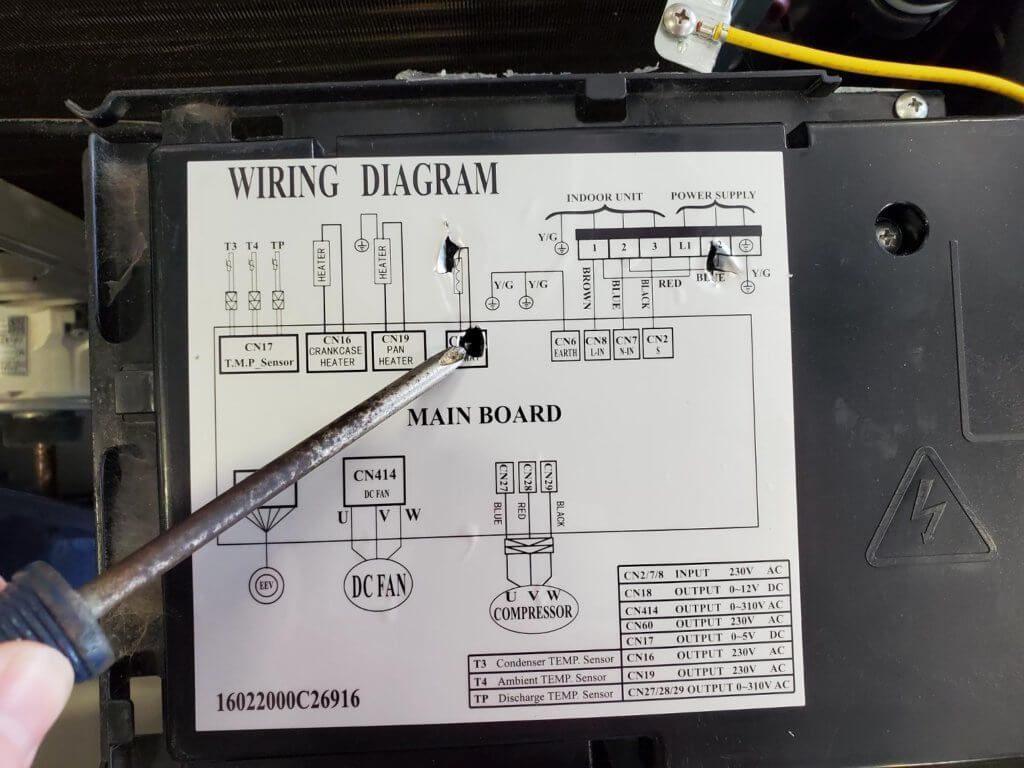
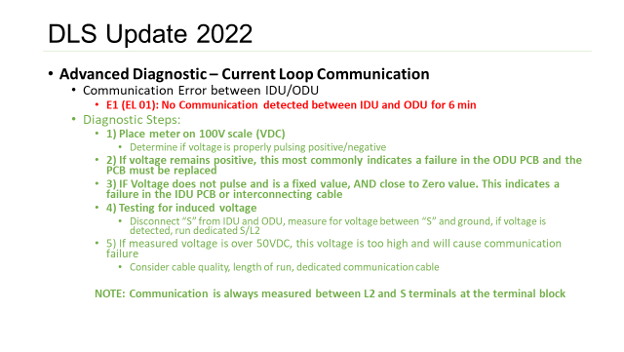
If you see a fixed negative or a small amount of fluctuating volts staying in the negative, the indoor board has failed.
If you see a fixed positive volt reading or a fluctuating positive reading the outdoor board is bad.
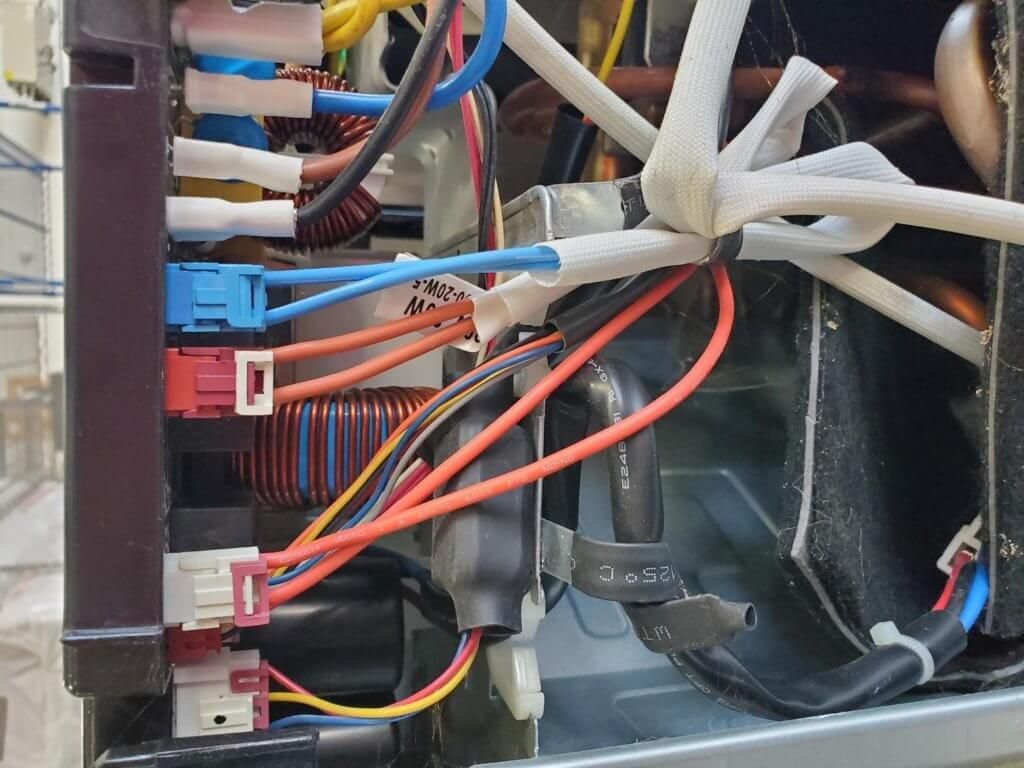
The reactor also needs to be checked. Check the reactor with the wires off and ohm it out. The ohm reading should be .1-1 ohm and should not be grounded.

July 6, 2022
The Infamous E1: Part 1
First, what is an E1 fault code? E1 is a ductless system communication fault between the indoor and outdoor units. Are you having a nuisance E1 after you replaced the circuit boards? Did you retro fit a ductless system using the existing wire and line set and received the infamous E1?
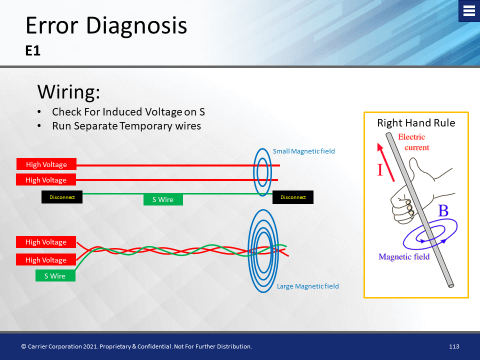
E1 from an induced voltage will cause communication problems with your new ductless system whether it is a brand new install or a retro fit change out. The problem is the wires inside the sheathing are twisted together causing an induced voltage on the “S” wire or signal wire. A 20 VAC and above will kill or scramble the signal causing a communication fault between the indoor and outdoor unit.
The way we check for this is to turn power off to the system, disconnect the “S” wire or the number “3” wire from both units. You may see the “S” wire or the number “3” wire depending on how the unit was labeled. Make sure the “S” wire does not touch anything when disconnected! Then turn power back on. I want to ensure you are cautious and aware: you are working on LIVE equipment! Set your multimeter to Volts AC with an alligator clip on one lead connected to the “S” wire and the other lead to ground; measure the induced current. It is preferred the reading is 0 volts, however, anything under 20VAC is acceptable. This problem has occurred due to using the wrong type 14/4 wire as well as using 18/8 wire. The use of the 18/8 wire is incorrect and dangerous!
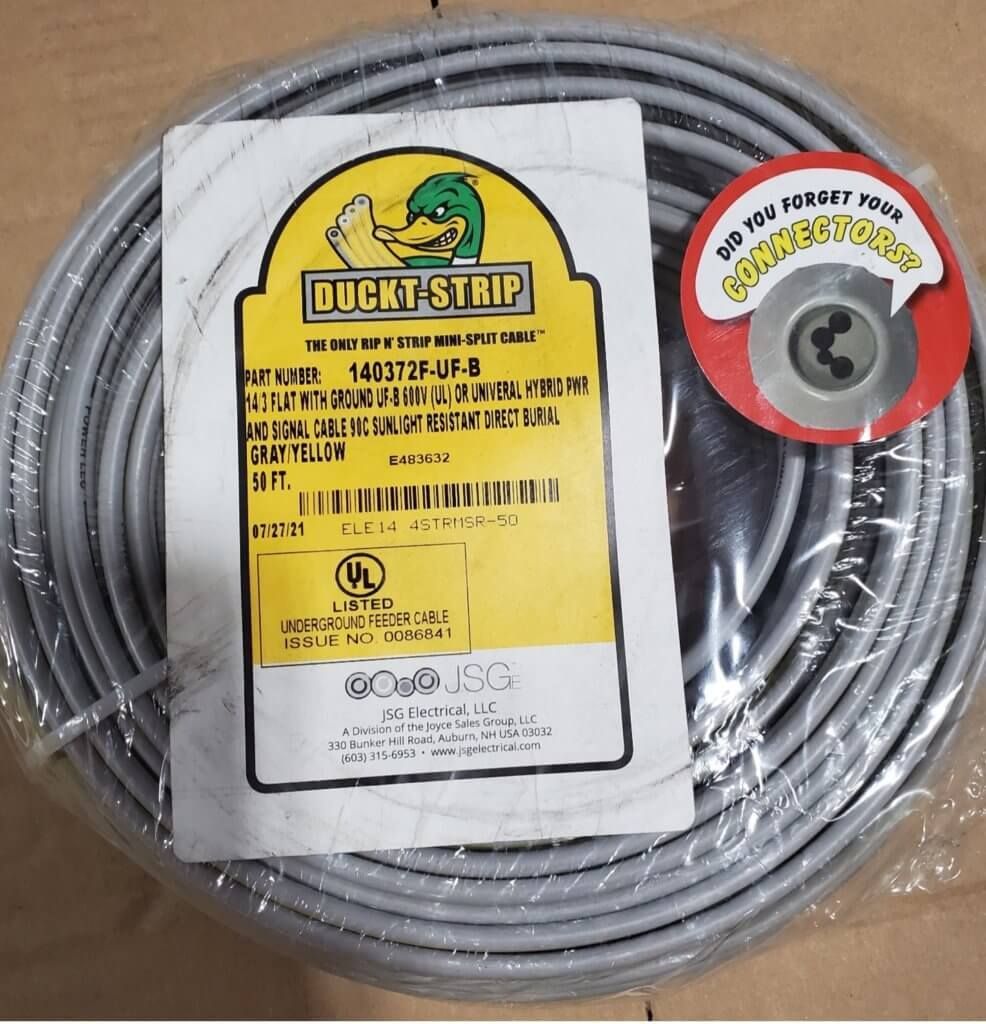
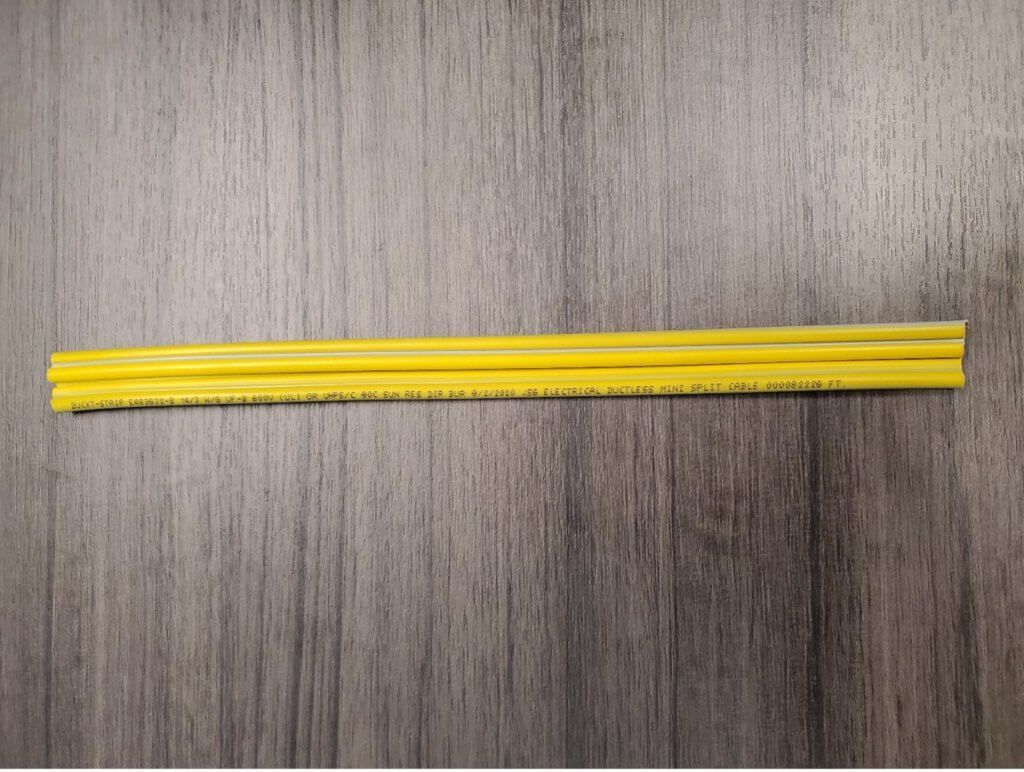
The way to correct this problem is by replacing the indoor unit wire with the correct 14/4 wire. It is recommend using Duckt-strip brand wire due to its flat 4-wire design. Also, the Duckt-strip will not self-induce voltage into the “S” wire. Something to remember when installing a ductless product: it is best not to run the wire next to other high voltage wires. This can cause an induced voltage as well.


Unlock the Full Potential
This installation was on a 4-story home, and the tech had not yet gone to the basement to troubleshoot the “infinity” water source heat pump, as he was told he by the homeowner. He was in the attic at the infinity furnace above the 4th floor. He was getting his dcv in the proper range on his A and B green plug on the air handler, 3 to 4 vdc. His indoor board ohm reading was in range, 28k to 32 k. The tech ohmed out the A and B thermostat wires on the water source heat pump from the upstairs. His ohm reading was not in range of a normal infinity board. His reading was around 64.4k. The tech then made the long walk to the basement where the “geothermal heat pump” was located. Bingo.
More to Explore
Heat Pump
Keep up with the latest HVAC news from Mingledorff’s Inc.