
Unlock the Full Potential
This installation was on a 4-story home, and the tech had not yet gone to the basement to troubleshoot the “infinity” water source heat pump, as he was told he by the homeowner. He was in the attic at the infinity furnace above the 4th floor. He was getting his dcv in the proper range on his A and B green plug on the air handler, 3 to 4 vdc. His indoor board ohm reading was in range, 28k to 32 k. The tech ohmed out the A and B thermostat wires on the water source heat pump from the upstairs. His ohm reading was not in range of a normal infinity board. His reading was around 64.4k. The tech then made the long walk to the basement where the “geothermal heat pump” was located. Bingo.
2. The second in SEER sequence is the HP 20 SEER/ AC 20.5 SEER. It has two nicknames: Greenspeed/ Extreme & 1st Gen Greenspeed/ 1st Gen Extreme. It is recognized by have the inverter at the top in a black box, with 3 items below it: control board, transformer, and a contactor.
- Inverter made by Emerson
- Typically, 40%-100% all variable
- Scroll compressors
- Outdoor fan motor is ECM
- Model numbers: 25VNA0/ 24VNA0 & 280ANV/180CNV
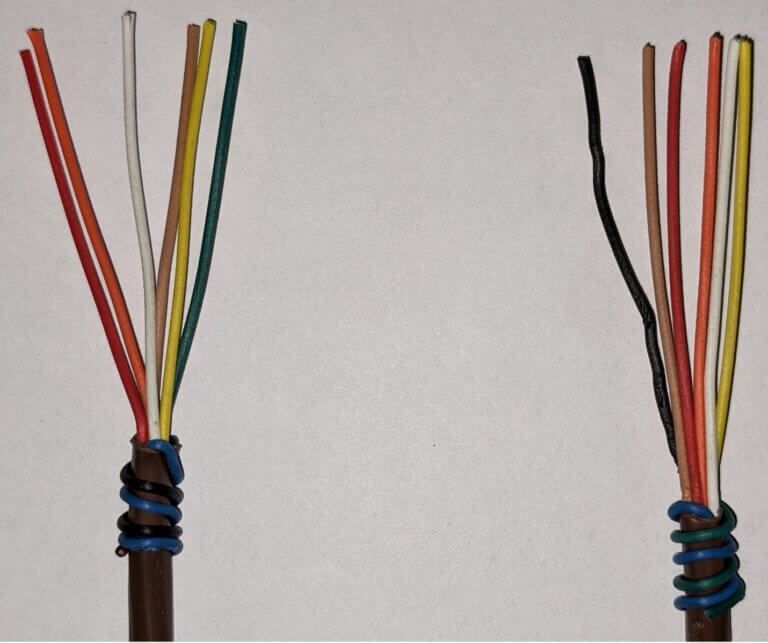
Now get out there and organize some zone wiring!
Zone equipment would be identified as indoor unit- blue black/ outdoor unit-blue green:
March 17, 2023
Voltage Drop on Contact Points
Most technicians know about checking capacitors under a load while a motor is running, but did you know that you can do the same thing with contact points!?
That’s right, on contactors you can actually inspect the points for quality BUT you cannot verify that the points are making good contact. Furthermore, you cannot see anything about relay contacts at all.
*** Before checking anything, please touch your leads together using ohms to verify the meter reads 0.0 (zero). Anything that the meter reads above Zero is how off the meter is. ***
One method that is time consuming for checking contact points: Unwire everything on the line voltage and to energize the coil. Use an Ohm meter to verify the resistance of the points. Anything reading greater than (1) one ohm is considered a bad connection.
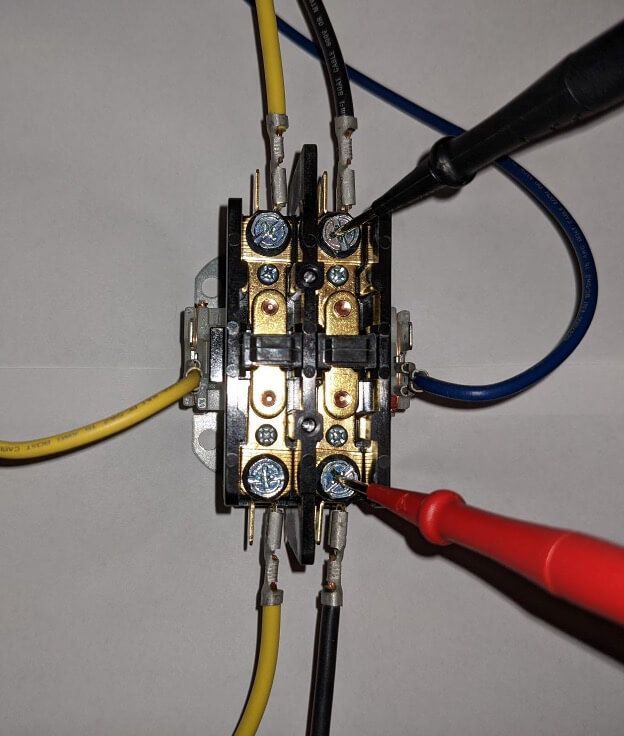
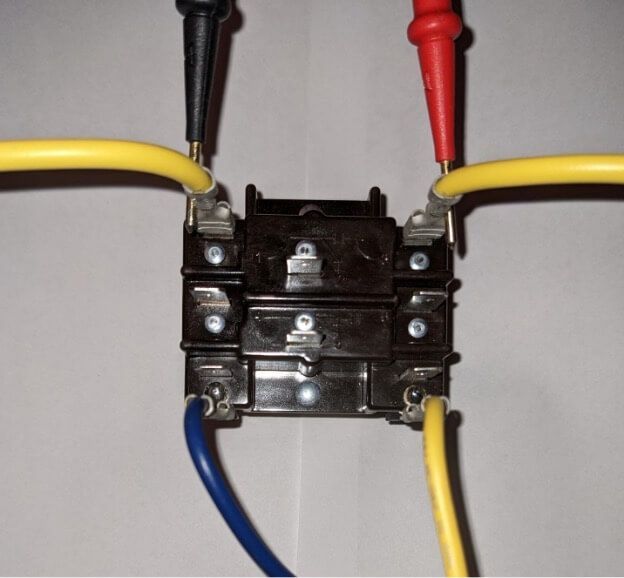
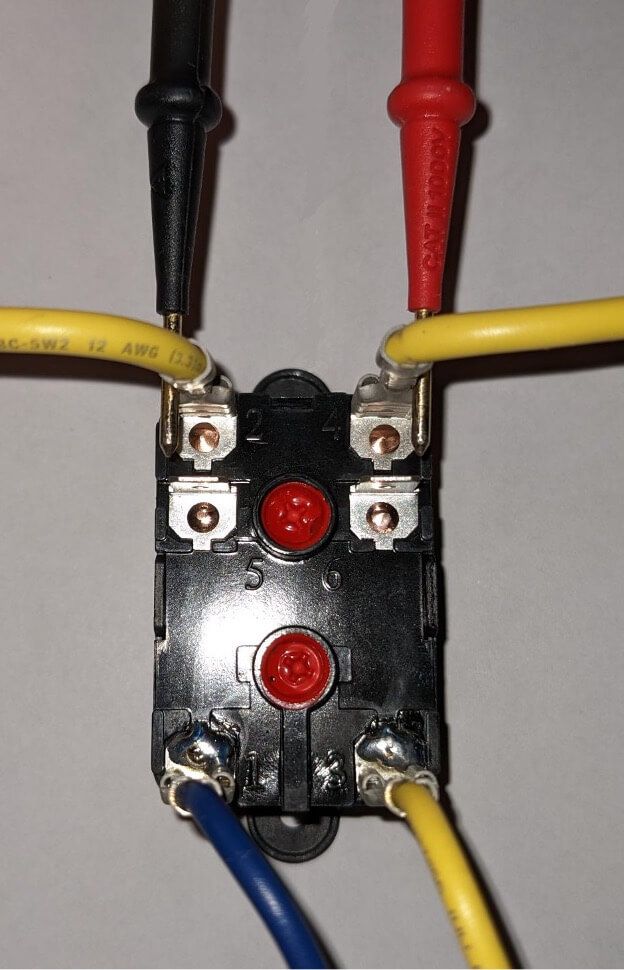
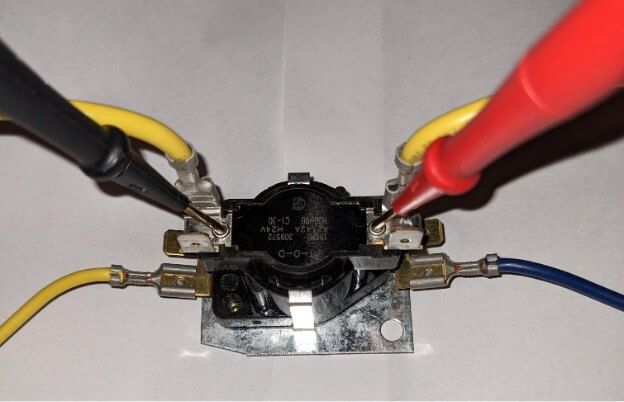
One quick method for checking contact points is using voltage drop. This will be tested while everything is properly wired, and the relay or contactor is energized (for normally open contacts). With a voltmeter, you place the leads in parallel with the contacts. This means that the leads will be in contact with both terminals/wires that feed the contacts. This test will be performed on the same side of power. If you know that the proper voltage is being applied, then the voltage drop should be (0.0) zero. Anything that exceeds 5% (five percent) of the voltage being applied to the contacts is considered excessive and would require replacing.
I have taken pictures of a 2-pole contactor, 2 different relays, and a sequencer; these are commonly seen devices in the HVAC industry. The meter leads in these photos represent examples of checking in parallel with the contacts. Again, the method described in this article is for checking Normally-Open (NO) contacts while the devices are energized. This test is not limited to the devices listed but rather a test that can be utilized across the industry. Anything that is a “switch” likely has contacts in it, if so, then this can be utilized to verify that contact points are making good contact.
MATH EXAMPLES for Voltage drop:
- If the voltage to your contacts is 236 Vac:
- 236 Vac Multiplied by (0.05) = 11.8 Vac
- 8 Vac or higher is considered excessive.
- If the voltage to your contacts is 118 Vac
- 118 Vac Multiplied by (0.05) = 5.9 Vac
- 9 Vac or higher is considered excessive.
- If the voltage to your contacts is 26 Vac
- 26 Vac Multiplied by (0.05) = 1.3 Vac
- 3 Vac or higher is considered excessive.


Unlock the Full Potential
This installation was on a 4-story home, and the tech had not yet gone to the basement to troubleshoot the “infinity” water source heat pump, as he was told he by the homeowner. He was in the attic at the infinity furnace above the 4th floor. He was getting his dcv in the proper range on his A and B green plug on the air handler, 3 to 4 vdc. His indoor board ohm reading was in range, 28k to 32 k. The tech ohmed out the A and B thermostat wires on the water source heat pump from the upstairs. His ohm reading was not in range of a normal infinity board. His reading was around 64.4k. The tech then made the long walk to the basement where the “geothermal heat pump” was located. Bingo.
More to Explore
Heat Pump
Keep up with the latest HVAC news from Mingledorff’s Inc.