
Unlock the Full Potential
This installation was on a 4-story home, and the tech had not yet gone to the basement to troubleshoot the “infinity” water source heat pump, as he was told he by the homeowner. He was in the attic at the infinity furnace above the 4th floor. He was getting his dcv in the proper range on his A and B green plug on the air handler, 3 to 4 vdc. His indoor board ohm reading was in range, 28k to 32 k. The tech ohmed out the A and B thermostat wires on the water source heat pump from the upstairs. His ohm reading was not in range of a normal infinity board. His reading was around 64.4k. The tech then made the long walk to the basement where the “geothermal heat pump” was located. Bingo.
Now get out there and organize some zone wiring!
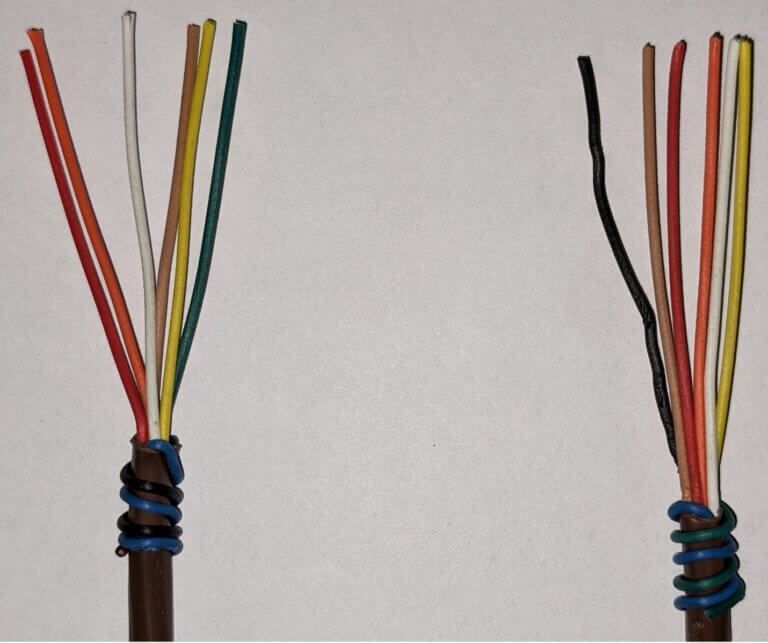
Zone equipment would be identified as indoor unit- blue black/ outdoor unit-blue green:
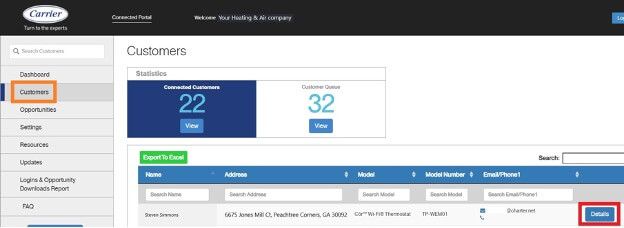
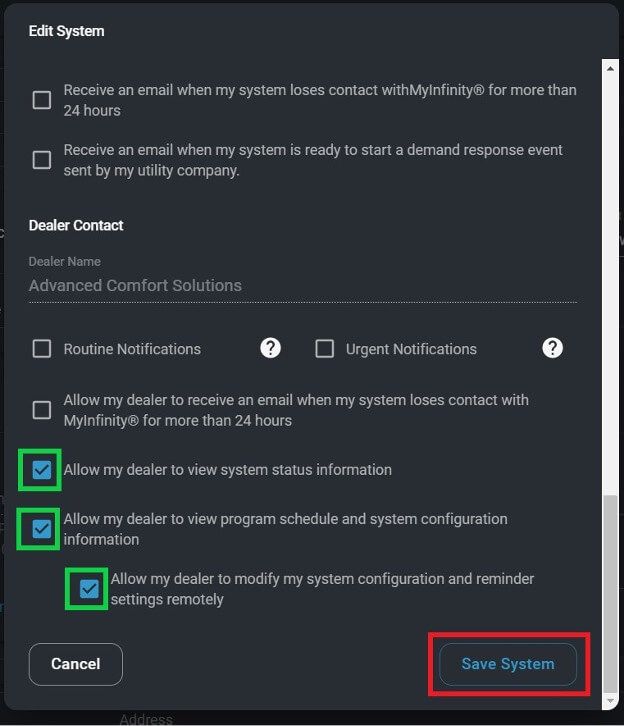
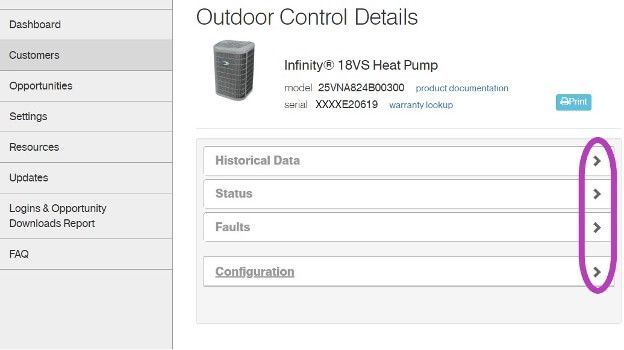
I have cropped some screens, and modified the serial numbers to keep certain dealer and customer’s information private. Setting the customers up on the portal is an easy process and could reap many benefits. Carrier and Bryant are going to begin utilizing this portal more with new upcoming equipment.
Get out there and get connected to the portal!
*Wiring diagrams highlighted with colors chosen for high contrast- not for wire color designation*
Low voltage starts in the red box at the transformer, 24vac goes to the Indoor Fan Board (IFB), through a fuse and on to the thermostat. Depending on what the thermostat calls for, 24vac will be sent down a different wire(s) to turn on/off the multiple devices in the system. The other low voltage wire (C) has an unbroken path to EVERY component in the unit. I have highlighted the pathway in blue and circled each component in purple. This wire/path is something each device has in “common”—it is the common wire. In layman’s terms, the common wire is the return pathway for voltage to come back to the transformer since it left out on the 24vac side.
The Common wire/terminal is always the one thing that is relatable or in common with the surrounding wires/terminals. Relays, motors, control boards, and even transformers all have some type of common wire/terminal. Common for a relay isn’t the same as common on a motor, but within each given device they carry the same meaning. Now go back and reread the second paragraph above—it will have a deeper meaning now.
Challenge: Check out the high voltage side of the Transformer. It has a COM terminal…. it’s not low voltage common. What is it?
That’s all.

Loading PDF…
Unable to Load PDF
Please check the URL and try again.
November 12, 2021
What is an Electrical Short?
veryone has heard the phrase: “it’s shorted.” What does this actually mean and how do you diagnose it? Let’s start answering that question by analyzing the formula for Ohm’s Law.
The Ohm’s Law: Formula is V=I × R
V is Voltage
I is Amperage
R is resistance
You can arrange this equation 3 different ways:
Voltage= Amps × Resistance
Amp= Voltage ÷ Resistance
Resistance= Voltage ÷ Amps
Now, back to the question at hand.
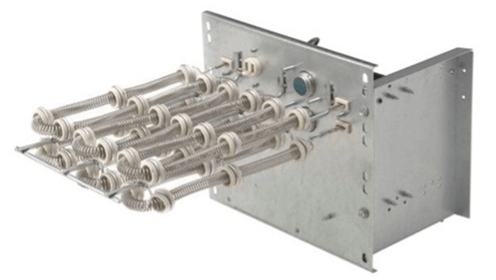
Let’s use an example of Ohm’s Law with a single phase 5KW(4800 Watts) electric heater at 240vac. If you have been in the HVAC industry for any length of time you have probably memorized that this heater will be pulling 20 amps right? But why?
If you ohm out a 5KW(4800 Watts) heater with a multimeter you will get 12Ω or 12 ohms (ohms is what resistance is measured with).
Using the formula for Amps from above, we can figure out why it is 20 amps.
Amp= Voltage ÷ Resistance
Amps=240vac ÷ 12Ω
Amps = 20
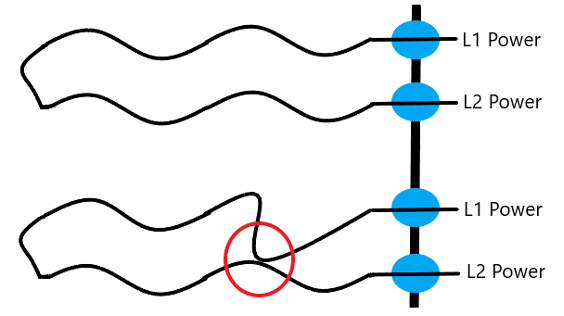
If the resistance of the heater were to become lower, it would cause our amps to increase. In the heat strip drawings: the top heater would represent a good circuit, the second (lower) heater would represent a circuit that the element has sagged and is now touching (in the red circle) which has created a “shorter” path for electricity to flow through.

When the path between L1 and L2 becomes shorter, it causes there to be less resistance between them than there should be. The shorter the electrical path is, the less resistance the path has. If the resistance were to be checked on the 2nd heater it would definitely be less than 12Ω. Let’s see an example if it were reading 2Ω using the same formula as above:
Amp= Voltage ÷ Resistance
Amps=240vac ÷ 2Ω
Amps = 120
This heater would be considered “electrically shorted” and would draw significantly more amps than what it was designed to. This would cause the breaker or fuse that is protecting the power wires feeding the heater to trip or blow.
If you have a fan motor, compressor winding, contactor coil, etc. that is a probable cause for drawing too many amps or blowing a fuse. You could check the ohm value of the electrical circuitry of that device and compare that value to what it is supposed to be.
An electrical short can be described as follows: when the resistance between any two points in an electrical device has become lower than what it is supposed to be, causing the amperage to increase.

Unlock the Full Potential
This installation was on a 4-story home, and the tech had not yet gone to the basement to troubleshoot the “infinity” water source heat pump, as he was told he by the homeowner. He was in the attic at the infinity furnace above the 4th floor. He was getting his dcv in the proper range on his A and B green plug on the air handler, 3 to 4 vdc. His indoor board ohm reading was in range, 28k to 32 k. The tech ohmed out the A and B thermostat wires on the water source heat pump from the upstairs. His ohm reading was not in range of a normal infinity board. His reading was around 64.4k. The tech then made the long walk to the basement where the “geothermal heat pump” was located. Bingo.
More to Explore
Heat Pump
Keep up with the latest HVAC news from Mingledorff’s Inc.